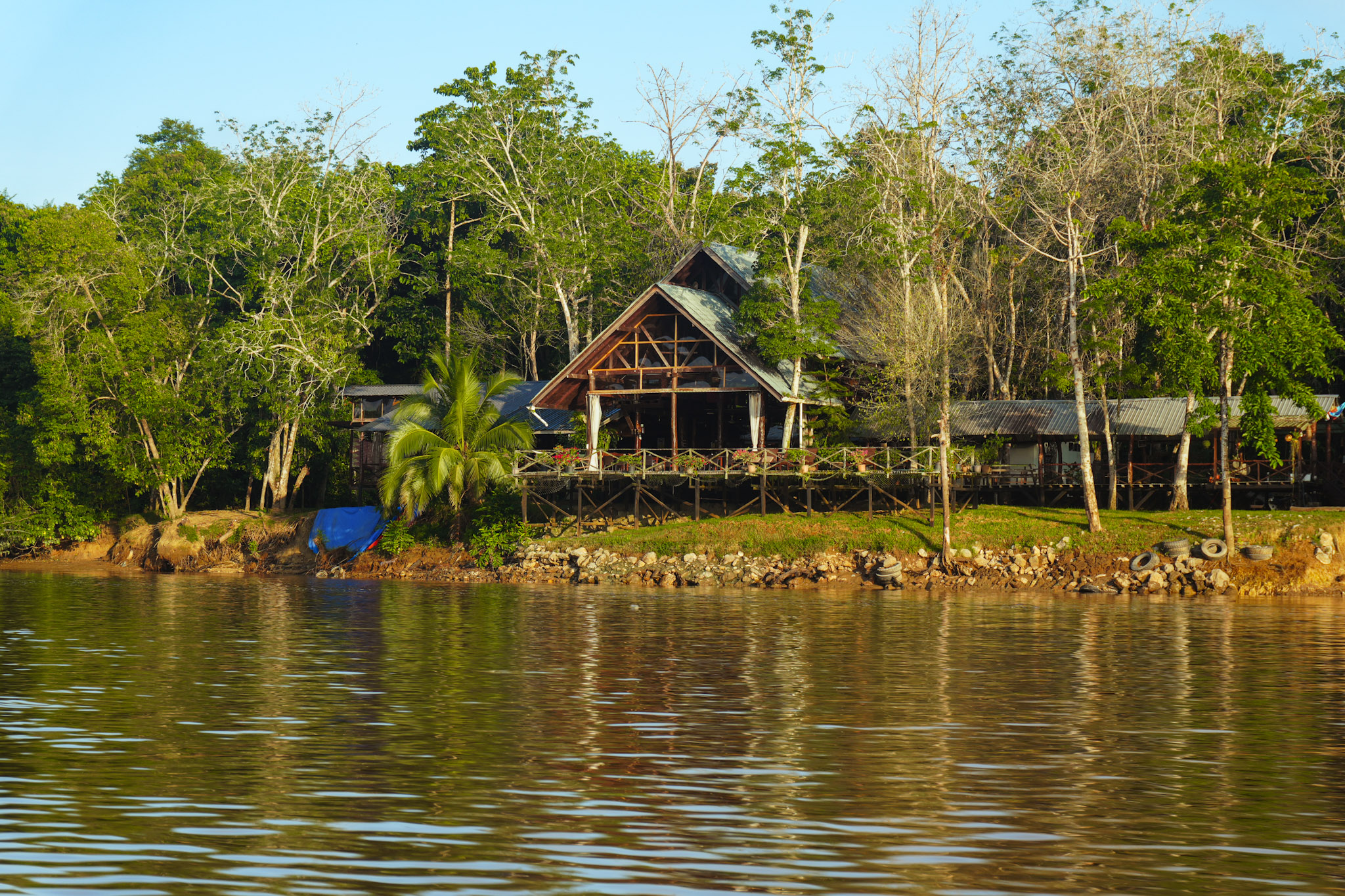
Reyt then. After four weeks in Malaysian Borneo, we can say this with confidence. Most travellers see around 30% of what Borneo offers. The standard route (Kota Kinabalu, Kinabatangan River, Semporna) is a good start. Borneo is an island the size of Western Europe. It has more to offer than any one-week trip can cover.
This is everything worth knowing about, from Sabah in the East to Sarawak in the West. Some of these we did ourselves. Some are firmly on our list for the next visit. All of them are worth thy time.

This post contains affiliate links. We may earn a small commission when you makes a purchase through links on our site at no additional cost to you. It helps keep us on the road.
A Quick Geography Note
Borneo is the third largest island in the world, shared between Malaysia, Indonesia and Brunei. Malaysian Borneo covers two states: Sabah on the East side (where we based ourselves) and Sarawak on the West. They’re genuinely different places with different cultures, different landscapes and different things to do. Fly into Kota Kinabalu for Sabah or Kuching for Sarawak, and you can comfortably link the two on a longer trip.
SABAH (THE EAST SIDE)
1. North Borneo Heritage Railway (Kota Kinabalu)
Want to feel like you’ve stepped into the colonial era? Board the North Borneo Heritage Train at Tanjung Aru Station in Kota Kinabalu. It runs twice a week, on Wednesdays and Saturdays. Departures are at 10am, with a return to Papar taking about four hours.
Dating back to 1896, the railway was built by the British North Borneo Chartered Company. It runs on the oldest track in Borneo. Five refurbished carriages have vintage upholstery. They include ceiling fans and no air conditioning. The windows stay open, which is half the charm. Staff wear colonial-era pith helmets and empire-builder shorts with long white socks. The whole experience is wonderfully, gloriously daft and brilliant for it.
The journey passes through rubber plantations, rice paddy fields, riverside villages and stretches of lush tropical forest. A continental breakfast is served on the way out and a colonial-style tiffin lunch on the way back. It’s not exactly the Orient Express but it’s a genuinely pleasant journey that conjures up the feel of another era.
A note for 2026: the train currently runs on a diesel engine due to maintenance on the steam engine. However, all carriages and the full experience remain unchanged. Book through Get Your Guide using code TIGHTTRAVELLERS5. Or book directly with the operator in advance. It sells out, particularly on Saturdays.
2. Padas River White Water Rafting (Beaufort District)
The Padas River offers 9 km of Grade III-IV white-water rafting. It has seven named rapids, including Merry-Go-Round, Break Point, Scooby Doo, Cobra, Curve, Lambada and Head Hunter. One of the most exhilarating day trips is available from Kota Kinabalu. The jungle train ride adds a double bonus, making it even better.
In Borneo, the day starts with an early coach from KK to Tenom Railway Station. Then a 1.5-hour scenic train ride through lush greenery and rivers arrives at Pangi Station for safety and river briefings before hitting the water. The rafting itself lasts 1.5 to 2 hours depending on river conditions.
The Padas is a muddy river, be under no illusions about that. You will get absolutely drenched. These rapids are the genuine article. Grade III-IV means real white water with real consequences if you fall in, which you might. The safety briefing exists for a reason. That said, first-timers do this regularly and the guides are experienced. It’s a proper adrenaline day out in the Bornean jungle and significantly more thrilling than anything Semporna’s snorkelling managed to offer us.
Best season: March to October during the drier months when water levels are optimal for rafting.
3. Imbak Canyon Conservation Area (Central Sabah)
This one is for the serious adventurer. Imbak Canyon sits deep in the Heart of Borneo, a 30,000-hectare conservation area of untouched primary rain forest that forms part of one of the last great wilderness corridors in Southeast Asia. It is genuinely remote. There is no tourist infrastructure to speak of. You will not stumble across another party of backpackers here.
Access requires permits from the Sabah Forestry Department arranged well in advance, and all visits must be guided. Multi-day treks of 3 to 5 days minimum are the norm. The reward is a primary rain forest experience that barely exists anywhere else on the island: old-growth trees with buttress roots the size of small houses, rivers running cold and clear over volcanic rock, and wildlife that hasn’t learned to be afraid of humans because it so rarely sees them.
Imbak is on our list for a return visit when time allows proper planning. If you want the real Borneo, unfiltered and unhurried, this is where to find it.

4. Maliau Basin: Sabah’s Lost World
Known as the Lost World of Sabah, the Maliau Basin Conservation Area covers 588.4 square kilometres of central Sabah and sits around 190km from Tawau, reachable only by four-wheel drive over logging roads and oil palm estates in a journey of approximately 5 hours.
The basin itself is a roughly circular depression surrounded by escarpments rising up to 1,675 metres, which is precisely why it remained unknown to the outside world for so long. It was in 1947 that a pilot nearly crashed into its mist-shrouded cliffs, inadvertently revealing this mysterious place to the wider world. Scientists have been discovering new species here ever since.
The basin contains 12 different types of forest from lower montane forest and heath forest to lowland dipterocarp forest, all thriving in a saucer-shaped basin that has been sealed from the surrounding landscape for millions of years. The highlight for most visitors is the 7-tiered Maliau Falls, a cascade through the jungle that requires multi-day trekking to reach.
All visitors must obtain prior permission from Yayasan Sabah (the Sabah Foundation) and all tours must be accompanied by official guides or rangers. Groups of between 2 and 20 can visit. This is not a place to turn up and hope for the best. It requires planning, a reasonable budget for the specialist operators who run the expeditions, and a level of physical fitness appropriate for multi-day jungle trekking. In return it offers one of the most genuinely unspoiled wilderness experiences left anywhere in Asia.
Firmly on our list. The kind of place you read about and immediately starts calculating how to make it happen.
5. Tawau and Tawau Hills Park
Tawau is in the far southeast of Sabah and largely ignored by international visitors who head straight from Semporna to Kota Kinabalu. That oversight creates a genuine advantage for anyone who makes the detour.
Tawau Hills Park contains some of the tallest tropical trees ever measured anywhere on Earth, including a Yellow Seraya tree recorded at 88 metres, taller than the Gherkin in London. Walking through a forest where the canopy is nearly 90 metres above thy head re calibrates the senses in ways that are difficult to describe.
The park also has natural hot springs, waterfalls and riverside trails through primary forest. Entry is cheap and visitor numbers are low. Tawau itself has excellent seafood restaurants along the waterfront that local knowledge consistently rates above anything in Kota Kinabalu, at a fraction of the prices tourists pay in the capital.
Tawau is also the gateway to cross into Kalimantan (Indonesian Borneo) if you want to extend the adventure across the border.
6. Madai Cave (Near Kunak)
Madai Cave near Kunak in eastern Sabah is one of the most extraordinary and least-visited sites on the island. A vast limestone cave system with evidence of human habitation stretching back over 35,000 years, Madai is home to millions of bats and the edible-nest swiftlets whose nests are harvested for bird’s nest soup, one of the most expensive food ingredients in the world.
The harvest is carried out by the Ida’an people twice a year using long bamboo poles that reach up into the cave roof, a practice that has been passed down through generations and continues largely unchanged today. Visiting during harvest season gives a genuinely rare glimpse of a food tradition that’s been going on in this exact cave for millennia.
The surrounding area also contains Madai Waterfall and the Madai Baturong Nature Centre, which provides context for both the archaeological significance and the ecological importance of the cave system. Entry to the cave area is minimal cost or free.
Few international guides mention Madai. Fewer tourists visit. That’s precisely why it’s worth going.
SARAWAK (THE WEST SIDE)
Getting from Sabah to Sarawak is a domestic flight rather than a short hop, but anyone spending serious time in Borneo should make the effort. Sarawak is a fundamentally different experience from Sabah: slower, more culturally rich, with a waterfront capital that’s streets ahead of Kota Kinabalu.
7. Kuching
The capital of Sarawak and the most genuinely pleasant city in Malaysian Borneo. Where Kota Kinabalu felt like money had been pumped in with little visible reward, Kuching (which translates, brilliantly, as “cat”) has a coherent identity, a beautiful waterfront, colonial-era architecture that has been preserved rather than demolished, and excellent food.
The Sarawak Museum, one of the oldest and best in Southeast Asia, is free to enter and covers the natural and cultural history of Borneo in comprehensive and genuinely fascinating detail. The Kuching Waterfront is a broad riverside promenade lined with cafes and market stalls. Fort Margherita stands across the river, built to protect Kuching from pirates and river invaders, now a museum giving insight into the life of James Brooke, the British adventurer who founded the Kingdom of Sarawak in 1841.
The food deserves particular mention. Sarawak Laksa (a coconut and sambal broth with rice noodles, prawns, chicken and egg) is one of the genuinely great regional dishes of Malaysia, and the hawker stalls around the market area serve it for well under £2 a bowl. Kolo Mee (springy noodles in a light lard and soy dressing) is the city’s other great breakfast dish. Both are significantly better than anything we ate in Sabah.
8. Gunung Mulu National Park
The single biggest thing you can do in Sarawak and one of the most spectacular natural experiences anywhere in Southeast Asia. Gunung Mulu National Park is a UNESCO World Heritage Site containing one of the most extensive and dramatic cave systems on Earth.
The four show caves are the starting point: Deer Cave (one of the world’s largest cave passages), Clear water Cave with its miles of underground river, Wind Cave and Lang’s Cave, all accessible via well-maintained walkways with a guide. None of them require specialist skills or experience. All of them are extraordinary.
The headline event is the bat exodus from Deer Cave at dusk: between 2.5 and 4 million wrinkle-lipped bats pouring out of the cave entrance in undulating ribbons against the evening sky. The exodus at dusk is the highlight of the tour, with 12 species emerging in an almost impossible quantity. We’ve seen a lot of wildlife moments across Asia and this is the kind of thing that puts them all in perspective.
For more adventurous visitors there is also the Pinnacles Trek, a 3-day hike to limestone spikes rising dramatically from the jungle canopy on the flanks of Gunung Api, and a summit attempt on Gunung Mulu itself for those with the fitness and the time.
Getting there requires a domestic flight to Mulu Airport from Miri, Kuching or Kota Kinabalu via MASwings. There is no road access, which keeps the numbers down and the experience quality high.
9. Bako National Park (Near Kuching)
Sarawak’s oldest national park sits about 90 minutes from Kuching by road and boat and gives tha the most accessible proboscis monkey sighting in Borneo. These animals (the long-nosed males are genuinely one of the most bizarre-looking creatures on Earth) are genuinely difficult to find in the wild elsewhere in Borneo but at Bako they’re almost guaranteed.

The park has 16 marked trails covering everything from short beach walks to overnight jungle treks into the interior. Bearded pigs wander freely through the canteen area at mealtimes with an attitude that suggests they’ve been doing it for decades and you are the one who should watch out. Pitcher plants grow wild along the coastal trails. The beaches are entirely tourist-free.
Day trip from Kuching or overnight in the park accommodation for the full experience. The overnight option means being there at dawn and dusk when wildlife activity peaks, which makes a significant difference.
10. Niah National Park (Near Miri)
The Niah Caves are a massive limestone cave system containing archaeological evidence of human habitation dating back 40,000 years and one of the most significant prehistoric sites in Southeast Asia. Cave paintings on the walls, ancient burial sites and evidence of a continuous human presence through millennia are all accessible via a 3km plank walk through the forest from the park entrance.
Guano collectors still work the caves, descending on ropes into the darkness to harvest the bat and swiftlet droppings used as fertiliser. The scale of the main cave (Great Cave) is so large that you lose all sense of proportion inside it.
Niah is en route between Kuching and Miri if you’re travelling overland through Sarawak, making it a natural stop rather than a separate detour.
Practical Notes for Borneo
Getting between Sabah and Sarawak: domestic flights are the only realistic option. MASwings connects Kota Kinabalu to Kuching, Miri and Mulu Airport. Check Skyscanner well in advance as seats on the Mulu route in particular sell out quickly.
eSIM: essential. Mobile coverage is patchy in the interior of both states. Get an eSIM before arriving and download offline maps for everywhere you plan to visit. Us tight travellers have consistently found Trip.com to be the cheapest for eSIM’s, check them out here.
Permits: Imbak Canyon and Maliau Basin require permits arranged in advance through official channels. Do not assume you can sort this on arrival.
Best time to visit: March to October for the drier season. November to February brings heavy rainfall, which affects boat trips, river conditions and some jungle trails.
Our Honest Borneo Verdict
Borneo rewards effort. The standard tourist route gives you a taste of what’s here. The places further off that route, Maliau Basin, Imbak Canyon, Madai Cave, Mulu’s bat caves at dusk, the Padas rapids by jungle train, Sarawak’s extraordinary laksa in a Kuching hawker stall at 7am, these are the experiences that make the island genuinely extraordinary.
We went for four weeks and came home with a list of things to go back for. That doesn’t happen everywhere.

